Key takeaways
- Age is a prompt to inspect, not a verdict.
- Granules in the gutters and curled or cupped shingles mean the shingles are wearing out.
- Daylight or damp wood in the attic needs attention soon.
- Repeated leaks in different spots usually point to replacement over repair.
Start with the age of the roof
Asphalt shingle roofs in the Dayton area often last somewhere between 15 and 30 years. Three-tab shingles tend toward the shorter end and architectural shingles toward the longer end. Ventilation and how much sun or shade the roof gets also matter. If you do not know your roof's age:
- check your home inspection report
- ask the previous owner
- look for permit records with your city or township
An older roof has not necessarily failed. But once a roof nears the end of its expected life, problems tend to show up across the whole roof. Repairing one slope does nothing for the other slopes, which are wearing at the same rate. At that point an inspection is worth scheduling, even if nothing is leaking yet.
What to look for from the ground
You can learn a lot without a ladder. Stand back from the house and look at each slope in good light. Binoculars help.
- Granule loss. Asphalt shingles are coated in mineral granules that protect them from the sun. As shingles age, the granules wash off. Look for bare, dark or shiny patches on the roof. Also look for sandy grit in the gutters and at the bottom of downspouts. A little loss is normal on a new roof. Heavy loss on an older roof means the shingles are near the end.
- Curling and cupping. Edges that turn up, or centers that dip, mean the shingles have dried out and lost their shape. Curled shingles catch wind and let water underneath.
- Cracked, torn or missing shingles. A few missing after a storm can be repaired. Many missing across the roof suggests the sealant strips have stopped holding.
- A sagging roofline. A ridge or slope that dips can mean wet, weakened decking or framing. Call a pro promptly.
Dark streaks on north-facing slopes are usually algae. They look bad, but on their own they rarely mean the roof is failing.
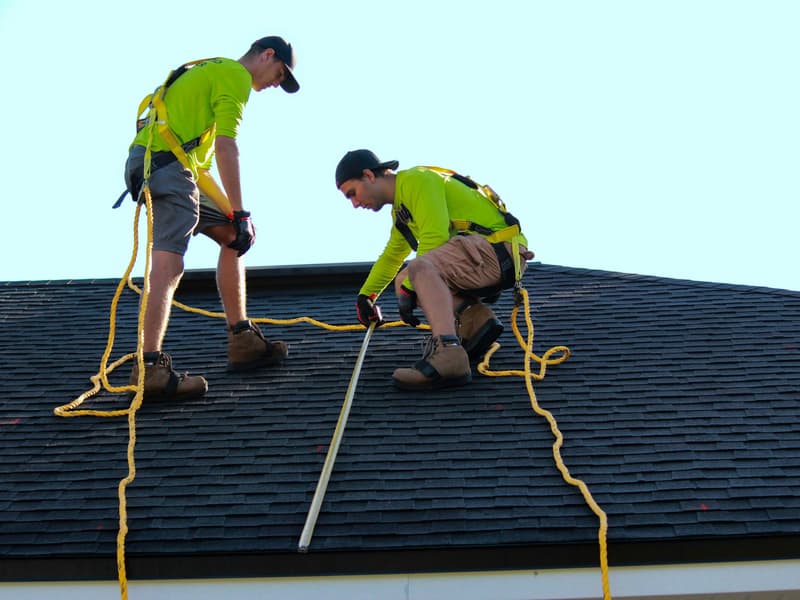
Do not walk on the roof to check. Aged shingles are slippery and easy to damage, and falls from roofs cause serious injuries. Getting on the roof is a job for a roofer.
What to look for in the attic
On a bright day, go into the attic with a flashlight. Step only on joists or a floored area, and turn the light off for a minute. Look for these signs:
- Daylight through the decking. Light at a ridge vent is expected. Light coming through the roof boards themselves means there are gaps water can follow.
- Stains and dark spots on rafters or the underside of the decking, especially around chimneys, vent pipes and valleys.
- Damp or matted insulation, which holds moisture against the ceiling below.
- Frost on nail tips in winter. This points to moisture and ventilation trouble, which wears out decking over time.
- Soft or sagging decking between the rafters.
Some of these signs point to a ventilation problem more than a shingle problem. If you see frost or mildew, read about attic ventilation.
Leaks that keep coming back
One leak at a chimney or pipe boot is often a flashing problem, which a roof repair can usually fix. A pattern of leaks is different. You may have had the same spot patched more than once, or new leaks may keep appearing in different places. Either way, the problem is not one spot.
Watch for:
- ceiling stains that grow after heavy rain
- peeling paint near the top of exterior walls
- water in the attic after a thaw
In our winters, leaks that appear only during a melt often come from ice dams rather than a hole in the roof.
After hail or high wind, have the roof checked even if nothing is dripping. Bruised shingles and lifted tabs can take months to turn into a leak. A storm damage inspection records the damage while it is fresh.
Repair or replace
A repair makes sense when the roof is in good shape overall and the problem is in one place. Examples include a few blown-off shingles, a cracked pipe boot or a loose piece of flashing.
Replacement makes sense when:
- the shingles are worn across the whole roof
- leaks keep coming back
- the decking is soft in more than one place
- the roof is old enough that repairs only buy months instead of years
A good roofer will tell you which situation you are in and show you photos. For the next steps, see the full guide to replacing a roof in the Dayton area.
Frequently asked questions
Can I inspect my roof myself?
You can check from the ground with binoculars and from inside the attic. Leave anything on the roof surface to a roofer, who has the fall protection and experience to walk it safely without damaging the shingles.
Do dark streaks mean my roof needs replacing?
Usually not. Dark streaks are typically algae, which is common on shaded slopes in our humid summers, and they are mostly cosmetic. If you are replacing the roof anyway, ask about algae-resistant shingles.
Is one leak a reason to replace the whole roof?
Not on its own. A single leak on a roof in good condition is usually a repair. Repeated or widespread leaks on an older roof are a different situation.
4 min read.